Showing posts with label interview. Show all posts

Tuesday, August 12, 2025

Mohamed Alhassane ag Elmoctar - “Halis"

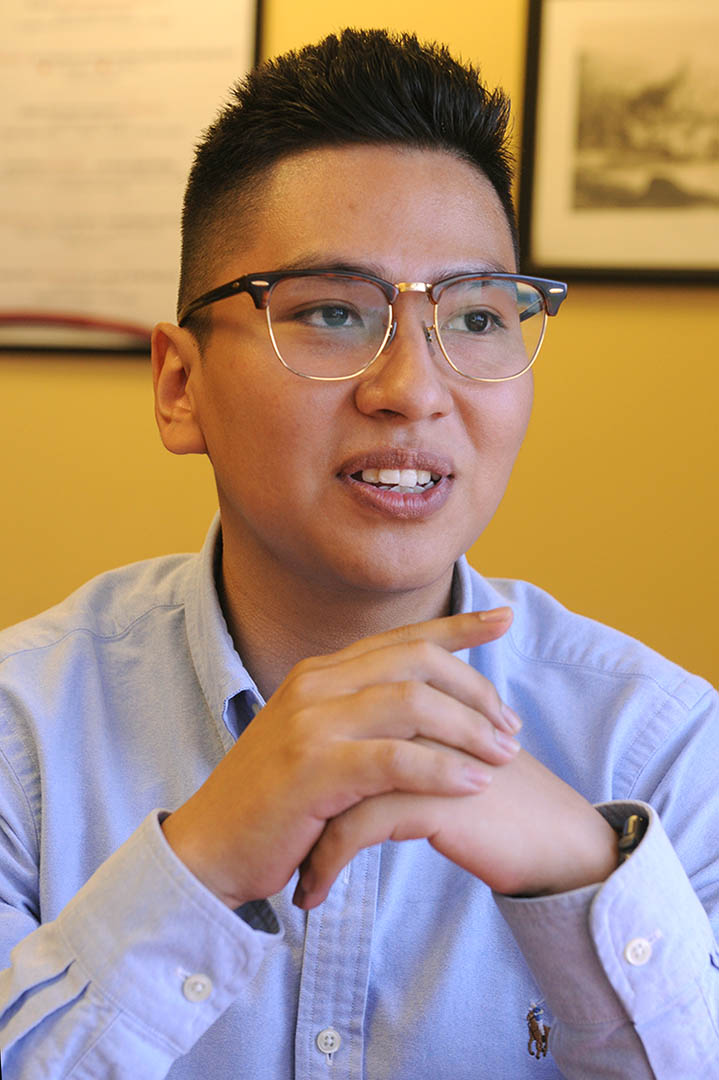
Mohamed Alhassane ag Elmoctar "Halis" is a Taureg man living with his family in the Columbia Pike corridor. Originally from Timbuktu, Mali, he is a hardworking award-winning employee at a local grocery store. His two  daughters attend Arlington County Public Schools.

Mohamed Alhassane ag Elmoctar is my official name, but in the desert, especially Timbuktu, you always have a nickname. My nickname is Halis. Halis in Tuareg language, Tamasheq, means man. Halis.

So this is the nickname my mom gave me, because I was born in a difficult time, in the year 1973. There was a terrible drought. All the kids born in this time died. We have no food, we are in the middle of the desert, no rain, animals died, the goats died, sheep, camels. So when you had a new baby, there was a 90% chance it can die. I'm surviving this, so my mom gives this name, man. Halis. That’s the reason for my nickname. If you go to Timbuktu now, you say Mohamed, nobody knows me. But if you say Halis, even in Bamako, everybody knows me.

My culture is Tuareg. Tuareg is the population who lives in the Sahara. So we have our Tuareg around five countries: Mali, Niger, Burkina, Morocco, Algeria. But the majority is in Algeria.

My father was a nomad, who was doing the salt caravan from Timbuktu to Taoudenni. Taoudenni is 1,000 kilometers north of Timbuktu. So that's the reason we don't see him too much at home, because he was always traveling. This takes two months. His father, the same thing, the same thing. Caravan, desert trade. I think he's also been to Zagora, in the Moroccan area, to bring sugar, spices, other material. For a thousand years. He always would do that. Because the men in my culture, men do bring food and everything for the family, and the women take care of kids and animals. That's the reason the woman has a big position in the Tuareg culture. And that reason, even though we are Muslim, we are not allowed to marry more than one wife. Just one.

When I started to work, I had some money, I tried to take my father to do haj to Mecca. He refused. He said he will never take an airplane because for him, it's not normal. He refused to go to hospital to check his eyes. He said, "If you don't look at that," meaning it is pride, so you don't need to do it. For me too, before I met my wife, I never checked my eyes. My wife saw me in Timbuktu driving, and she told me, "I think you need to go to hospital to check your eyes" My wife, too, obligate for me to. Otherwise, no glasses. We always did everything for ourselves. If you have a problem, if you burn, you have a medicine in trees. If you have headache, you know what you're doing. Nothing about hospital. Everything is local, everything.


I will always wish good for my father too, but in my culture, mom is the foundation of the family. All your life you are to make your mom happy ... that means, even if she died, she wished the best for you and she protected you for everything. To tell you how the woman has a good position in the culture. The city of Timbuktu was founded by a woman. Timbuktu. “Tim” means the well. “Buktu” is the Tuareg lady’s name who took care of the well. Because before we had caravans come from Chinguetti in Mauretania to Timbuktu. So everyone would come to meet at this well. Timbuktu. You would say, "Where are you going?" I am going to Timbuktu, to her wells.

 We always had freedom in the desert. We were always born in freedom. We always were nomads. Then came the drought. My father lost his animals. Before drought he had around 300 camels. He lost everything. So he was very sad... he cannot stay in the desert, because the desert, if you don't have a camel, you don't have a goat, you don't have a sheep, you cannot stay. This is something you need to have to survive in the desert. So he lost everything. I think when he arrived in Timbuktu 1981 he had around seven, ten camels. He had some cows and sheep, and he sold them to someone in Timbuktu. So for that reason I had the luck to come to in the city. Otherwise, without the drought, I would never see the city. I would have stayed in the desert.

 He stayed in Timbuktu like 7, 10 years. He had a shop. he started to get a lot of money and every time he got a lot of money with his shop he would buy goats, sheep, and then he started to leave again. He started with going 10 kilometers from Timbuktu, then 15, 20. So the more money he had, the farther he’d from Timbuktu.

I was trained to work with camels and animals.. Because after 10 years in Timbuktu we go back to the desert, going between Timbuktu and the camp. So the reason why I went to the school and I stayed in Timbuktu, was my uncle. My uncle is the one who gave me a chance to study. So first he ggt a scholarship to study. He studied English. And then after that he come back to Bamako. He is the first guy who opened a business as a travel agent, tourism. He's a good businessman. So he sees me, he said, "You don't have your place in the desert. You need to stay in Timbuktu." And I stayed in his house, I followed him, he gave me much training in tourism. And for that reason I became a guide in Timbuktu. A lot of tourists came to Timbuktu. Especially Americans. For an American, the first thing he does when he comes to Timbuktu is like, "I want Timbuktu stamps in my passport." This is the most important thing! I learned English as a tour guide, but at the school, too. I spent around 10, 11 years in school. And I had a private teacher. I paid a teacher to train me. My uncle, too, helped me with that. 

I worked as a tour guide until 2012, when Timbuktu was invaded by Al Qaeda. I ran a guest house, and had to close everything because of trouble in the desert and lot of problems; all my reservations canceled, too. The political situation was very bad. 2012, that's the worst for us. It started in 1992 but the worst was 2012. It affected all of our area and all of the north too. The worst was when they started to kidnapping tourists and we don't have any more tourists. And it's crazy for the Timbuktu population because most people in Timbuktu survive with tourism. The people have a car, people have a camel, people make the jewelry. So tourism brings a lot, a lot of money in Timbuktu. But with this situation, kidnapping in the Timbuktu middle city, this is the Timbuktu tsunami. Tsunami. Yes, crazy.

 Well, we came to the US. I first came here 20 years, 25 years ago. Every year I would come for one month because my wife is American. I met her in Timbuktu. She was working for an American organization named Africare. She stayed in Timbuktu four years, and then we would visit because her family is in Colorado, Denver. Every year we’d come and vacation to her family to Denver. But two years ago now, we decided to come to Arlington, to stay in America. Because I thought I’d have a lot of problem about getting a visa with my Malian passport. So now I think the best thing to is to come here and apply for a green card and then stay here, apply for citizenship. And then I will have freedom. I will have the key of the world. As a nomad, I needed to be free to go everywhere. But with my Malian passport it is difficult.

We came to Columbia Pike. We are lucky people. Because my neighbor here in this townhouse area now was my neighbor in Senegal. She's American. She's my wife’s friend. She was working in Africa and then she moved here. And she lives in this compound here. Our neighbor, she was with the State Department. So my wife told her we wanted to move here. She paid a deposit before we arrived here. Everything was set up for us. We also have two lovely daughters who are in high school. Both go to Wakefield now. One was in Jefferson Middle School, but now she will go to Wakefield.

Now I am working at Harris Teeter, the grocery store on Glebe Road. Now have my green card, my social security and my work permit. I had applied for jobs. And I go to the mosque. It's not far from here, a Bangladeshi mosque. I met Mauritanian people there, because some of them are our neighbors. I told him I want to have a job. One guy told me, "Oh, I can help you. I can put you in the Indeed." Indeed is a company here, an online way to look for jobs, American. So he put all my information on Indeed and I started to have people want to hire me. One morning, some guy said he wants to have an interview with me.  Up in north Glebe Road. Not far from here. And I go, I do the interview. They said, "Okay, you did good." At first that was confusing, because in Africa and the French system, when you're being hired you are asked, "What school did you go to? What are you speaking?” I looked at the job and said, "Come on." So the first day I started, they give me training. After training, my department manager is the deli. Fresh food department. She put me in the pizza. My first time to touch dough. Oh, my God. I start to make pizza and I remember my life in the desert with camels, with tourists, and today I am here. This is America. My American dream starts now.

I like my job. Harris Teeter is not only like a shop, Harris Teeter’s really an institution which helps people to work, helps them to learn. It's like school for me. Really. It's like a school. People who know nothing, then get training to be a cook. You believe me, if I go back to Africa now, I can open my pizzeria. I’d say, “America pizza!” If you say you come from America, you make pizza. Everybody will come. Ten years turning pizza in America!

 The people I work with are from many countries, too. When I am there I feel like Africa. We have a Moroccan, we have a Sudanese, we have Gambian, we have Senegalese. We have Bangladesh, we have Malaysia. It's crazy. All at this one store. And we have Americans too. So it's good to see all those people work together, how it's different, how we can talk with the Malaysians, how we can talk with the Bangladesh people. 

 The mosque here off of Walter Reed Drive is Bangladeshi, it’s like a house. I like them, those people, the Bangladesh people. The imam is Bangladesh but he studied in Saudi Arabia. He has a good job because the imam teaches Quran to all the Bangladesh kids. They have school In the mosque.

I wake up here early and I go to mosque. The first thing when I told people I will move to the United States, they say, "Oh, are you crazy? You move there, you will die. You will get shot the first day. Somebody will shoot you." Around here people tell me "Be careful. Don't do crazy things like Africa. Don't go knock the door people like this. Take time." So that reason, for example, [n our culture, it’s different. I just walk to the front of a man’s house. He’ll come out from his house, and then we’ll start to talk. So I try to, we say in French. “put a little bit water in your wine.” Everybody calm down.

 In Mali, we too have many mixed people. That's the reason the country's very nice. We have a strong culture and we have different communities and each one respects the others. I'm a Tuareg, if I see the Bambara person from Bamako I know how to talk to him. I know how to work with him. I know how to make business with him. The Bambara, too, he knows how to talk to me. So we have something special. That is a Mali. That's the reason I say we don't need to fight. I am used to a mixed culture. 

Things are not much different for me here, because Arlington for me is like Africa because you go two blocks from here you have an Ethiopian shop. You want Ethiopian bread, you want injera, everything, cross, whatever, you buy. Then after that we have a cigar shop that is Moroccan. I think this is the one thing that makes America famous in the world. Because if you come here, you white, you green, you blue, you whatever, you’re American. This I hope is the one thing about America we have not lost. Because this is the most important thing for America. I think that's the one making this country. That reason... and freedom.

 They say to make tea you need to have three things to make very good tea. Time, good friend, and charcoal. The tea I make, nana tea, mint tea, it’s not strong. Because in my country, you can make it very strong. But I make a strong one when I eat meat, when I make barbecue, because if it's strong you must have something in your stomach. For us, hospitality is our reason for living. I remember our house in Timbuktu, my mom gave all our lunch for people who don't call, who don't say nothing, they just arrived at lunchtime. So she give all our food to these people who came in. And she left kids, her kids, we have nothing then, but when the people are gone, she cooked again for us. She would go and she’d bring hospitality to others, even if we are poor people, too, she would try and be her best, best, best, best, best. You treat everybody like they're honored guests and you know that they're going to carry it forward. Those people are going to tell others what they experienced and what they felt. Your reputation is very important. In the Taureg, your reputation is important. You show your best face to the world, even if you're poor and whatever is your situation. You should present yourself as intact. In good shape. 

Muslim women in Mali don't put on the burka, but the men have a turban because it’s to protect us, but it's a culture, too. For example, in my culture, a man, he must cover his mouth. It's not polite to talk in the middle of the people with your mouth open. It's seen as bragging. You must respect the people in front of you. But in the same way, I think people from the desert, it's very sometimes windy, dusty, hot, and this clothing keeps you cool inside. 

 Every morning. I get messages from my brother, my nephew, my sister; they have a problem, they need help. They're still in Mali, in a refugee camp. My brother has been 23 years in the refugee camp in Mauritania. He has WhatsApp now, so I can see him in the middle of the desert. This is crazy. So if I have a question for him in the middle of a refugee camp, I can try to call him. 

To go to Europe, a guy has to pass through the Sahara Desert to go to Algeria, Libya to take the boat. You need to take everything. You can spend two, three days, no gas station. Water and gas, because no station, no hotel, nothing. You must bring everything with you. No roads. So many died in the middle of the desert before they arrive. Many cars break in the middle of the desert. And sometimes we have bad people who have a car and then leave people in the desert. For me, to be in the United States here, Arlington, I don't need to worry like in the desert. 

I have won some awards at work - hero of the month. A hero is chosen because the whole shop decided this person was fantastic. Everywhere there is a camera in the shop. A bunch of the managers have the job to look at the camera, to see what everyone is doing. Every day, they follow someone from when they are starting until the end, to see what you're doing. And then they decide if someone is a hard worker or not. They gave me $50 bonus, nothing that special, but nice.  But it's good to recognize what I am doing.  This is for me, is very, very important. I'm so happy with this company too, because I told you, it's like a school. I know how to make pizza. I know chicken, rotisserie, fried chicken, baked chicken, ribs, prime ribs. I’ve become a chef. Everything I learn here, sandwich, cut meats, everything.

I have one Mongolian guy who works with me in the pizza. We have the same culture, his is the same as Mali. Even when we work, even talk, I see how his character is, we have the same. Because people from the desert who have animals are the same. And they have camels too, a different kind, with two humps. And the desert, we have camels with one hump. Because of the weather, because it's cold. With all the snow, and desert is dry and hot. Because the two humps, he can drink 200 liters water. And our camel, I think 100 liter. In the winter, he can spend two weeks without a drink. But when he drink, he drink 150 liters. In the summer, every three, four days, he must drink water. For us, we don't play with the camel because the camel is our car. We travel with them. We cannot... Well, sometimes for marriage or festival, we can do that. We use the camel as a pickup truck. That reason we like to eat meat of camel, but we cannot kill him for his meat. Only when he's broke legs or he's sick, then maybe. What they do is in our culture, too, because in the desert when somebody visits you in the desert, when he comes to your house, you're responsible of his security. So when he goes out from your house, you need to go with him until he's in the camel or car, then afterwards you're not my responsibility anymore. When you are in your car, I am finished with my responsibility.


For me, the thing that makes me feel most good is when I share what I have. Because in this life, you need to share what you have. And the thing that can most be a benefit for you is what you share. It's not what you invest to have another house. We have another car. This is nothing. It's what you give by your heart. You need to believe something, otherwise you will be crazy. Especially now in this world, otherwise, you're empty.


Many thanks to Jim Wolf for introducing us to his neighbor, Halis.
Thanks also to Mike Laris of theWashington Post for sharing the recording of our conversation. Much obliged. 

Interview and photography by Lloyd Wolf.


Monday, February 24, 2025

The Pike: the power of humanity's kinship - A podcast by Political Devotions

A terrific podcast about the work of the Columbia Pike Documentary Project has been created and shared by Bryce Tolpen of Political Devotions

It provides excellent insight into our project, and features the voices of team members Sushmita Mazumdar, Dewey Tron, and Lloyd Wolf. Take a listen here - worth it.


Tuesday, November 1, 2022

Luis Rocha

Luis Rocha, originally from Bolivia, works for the Arlington Community Federal Credit Union branch on Columbia Pike. A student at George Mason University, he also dances in a traditional Bolivian folklore group.
 
The Job:
"I got this job, honestly, through the connections I have within the Bolivian community in this area. I was born in Bolivia, and my parents were also born in Bolivia. We were born in the same city, Cochabamba. This area, Northern Virginia, also just happens to be the number one most populated area of Bolivians outside the country of Bolivia, containing over 40,000 Bolivians in the Northern Virginia area. It’s through this community that I met a lot of friends, it’s what I call community. My mother remarried, with a great guy called Julio, my stepdad, who has a cousin who works here. We met Julio through the Bolivian community, we all danced a Bolivian folkloric dance called Caporalés
Just before finding out about Arlington Community Federal Credit Union, I was kind of at a low point in my life as I was suspended from school at that time. I was not doing great grades-wise, and my whole career plan was changing and I didn’t know if I still wanted to be in engineering and computer science, just because I was doing poorly in school. I had to do something. I couldn’t just stay at home and do nothing, so I was looking for a part-time job. So, Julio’s cousin who works here said, “Oh, we are looking for young people.” They didn’t have to have worked at a bank before and so I came here, eager to learn, eager to work. They taught me everything and it has been amazing here ever since.

Working here in Arlington where my family first settled when we came to this country, is just a huge coincidence. I have lived in many places in Northern Virginia. When we first came here, we lived in Arlington and when I started elementary school we moved to Fairfax County, to Lorton Station. That’s where I lived through most of my raising, and since I was being raised by a single mother I was out on my own a lot while my mother worked. I quickly learned how to use public transportation to hang out with my friends in D.C. and in Arlington. I also lived in Annandale for some time. Then we moved to Springfield and just about 2 years ago my family bought our first house. We are no longer in the Northern Virginia area but live in this small town called Montclair near Woodbridge.
I knew nothing when I came to work here. Honestly, I didn’t know what a credit union was. I barely knew how banking worked. At first, I had wanted to be a teller at Bank of America, and I had applied there but they denied me because I had zero experience. So I applied here and said I have zero experience, but I am a hard worker and can solve problems on my own, and if you teach me, I can do it. So I was given the opportunity, they taught me everything. What’s awesome about this company is that there was a two-week training/orientation seminar and in that I thought they were going to simply teach me what I am going to do, and what my responsibilities were going to be. But it was much more than that. I was taught what the company stood for, how a credit union functions, and what was the core mission. It was a lot more than just “This is your job,” and I loved it.  I resonated with the mission and the values that this company has. I was very thankful that they gave me this job and would teach me everything I would need. Ever since then I have been given a lot of opportunity here. I was really looking for just any part-time job and instead I found a great life opportunity here full of great caring people who I consider a second family to me.
 
Being a Student:
 
Right now I’m still a student at George Mason University. I am at the School of Business and am majoring in Management Information Systems. So I am doing full-time work and full-time school, which I never thought I’d be doing. I remember just a few years ago hearing about how my older friends would do full-time work and full-time school and always thinking “props to you, I could never do that,” but here I am doing what I once thought I was incapable of doing. It is a lot of work but I have a lot of support from my family and my co-workers here. My manager is very supportive of my studies. My girlfriend and her family are very supportive too. They help me. I am very thankful for that. I am very lucky.
 
Engineering and computer science is where I want my career path to go towards. I want to be in the tech industry for sure. One, I was always interested in technology, gadgets, and programming when I was a kid growing up. I loved jailbreaking devices, like hacking my own computers and phones and modifying them and injecting code. It’s fun. I loved taking something standard and universal and then customizing it when people thought It wasn’t possible. I’m not able to get a computer science degree or an engineering degree with my current credits so I am focusing right now to finish with a business degree, and also getting some tech certifications. Then I’ll start applying to intern, and try to get my foot in that career path. But I have been keeping my doors open. It’s not that that’s the one thing I want to do. I am interested and open to other possibilities as I don’t know what else is out there. I don’t know if there is a job I might like even more. I’m currently a teller but recently, just this past week, I got accepted to be an accounting specialist for this credit union. I never thought I’d be in accounting but it’s an experience that I really think will help me in any case. I am also part of the IT Ambassadors program which means that whenever there is an IT issue going on they send us weekly updates informing us how they fixed it, what was done exactly, and what the problem was - insider experience on what it means to be in IT. 
I was also the Cultural Ambassador for my branch for two years. It was awesome. It was a committee with one person from each department that would meet routinely to plan cultural events/celebrations and also work on projects to promote employee engagement and wellbeing. It’s our job to be the “cheerleaders” of each department and motivate our team to participate in community events and credit union activities. We also have the opportunity of thinking of new services or benefits for employees. For example when I was in it, we incorporated pet insurance as an optional benefit so our employees now have that option because one of us, as a cultural ambassador, brought it up in one of our meetings. We plan out what the credit union is going to do for Mother’s Day, Volunteer Recognition Day, Breast Cancer Awareness Month, what employee competitions we are going to have for Halloween… stuff like that. It’s to get the whole organization involved with the culture of the area that we are in.
 
The Future:
For my own future, aside from my career path, me and my girlfriend have talked about this—ideally, if we are able to, like if we can afford it and if we are able to find the right home, we would definitely love to live in Arlington. That would be our number one ideal place. We love the social aspect of city life. Originally we were thinking of DC, but then that’s too expensive and we have never lived in DC and we realized we really only like going there on the weekends. Meanwhile, Arlington gives us that busy, cultural city feeling that we really like and it's still home to us and right on I-95, so we decided we would like to live in Arlington, definitely. 
My stepfather and his whole family grew up and still live in South Arlington, they have a house there. He has three other siblings and right now the parents are looking to retire and they have a house there, it's beautiful, it's cozy. And me and my girlfriend have been eyeing it. Like sell it to us, please! But because Arlington is becoming so polarized and becoming the next big city, housing prices are insane and we’re not the only ones that want to live in that house! Ideally, if everything goes right, I will be living in that house, here in Arlington, with my girlfriend. I think it will work out. I’m hoping for it at least.
But that’s another thing. When my family came here to Arlington I’m pretty sure they also wanted to stay in the area. It was familiar as there was a large – outside of just the Bolivian community – Hispanic community which was amazing for my parents. Like my mom could go to the market, do laundry at the laundromat, do everything and she didn’t have to know English. But, as you can see, we moved away as we couldn’t afford Arlington’s rising prices. I had other friends from the Bolivian community who were born and raised in Arlington but their families are also moving away over time. They are buying their first homes or renting elsewhere like in Woodbridge, Fairfax County, or Maryland. They tell me they would prefer to stay in Arlington, though it seems like some families are getting priced out and those who grew up there can no longer afford to live there. And that’s sad. It’s an issue that I wish there could be a solution for but you can’t really stop people from buying homes and you can’t stop people from selling their homes if someone is willing to buy it for a higher price. It makes me a little scared for the culture we have here. Like someone my age you ask them why you want to live in Arlington and they will tell you it’s the next big city, the next D.C. There’s a lot of tech companies here, Amazon is here, and other big tech companies are going to be here. There’s new hip apartments, new construction for luxury high-rises, there are new cool restaurants and coffee shops here and there and that’s all cool and everything. I admit I like going to those places on the weekends, I like taking pictures around parks and things like that but when I grew up, it was a much different Arlington. I still go to Pan American Bakery, it's five minutes down the Pike because they make my favorite salténas. I really love Arlington because this place was my community and my heritage. So hopefully if I get that house, I still want there to be that same familiar Latino community here. But not just that. I know that there is a large Eritrean and Ethiopian community here. Right next door there is an Ethiopian restaurant, and they have whole plazas full of their culture---foods, hair salons, markets. Me and my girlfriend, we love going through those. We went to a little Indian market the other day because she was looking for a specific curry to make dinner. She had roommates in college that were Indian so she learned to make authentic Indian food (as best as we could of course). I loved seeing new products in different languages, different candies and foreign products from there. I just love the raw culture, the melting pot of it all. I’m not necessarily excited for the gentrified Arlington. But I mean it’s progress nonetheless, I’m not against it, I’m not saying we shouldn’t let people come into Arlington who want to be part of it. But I mean everyone should be aware of the rich culture we have in this area and should at least somewhat respect it or appreciate it.
If the people move away the businesses will be gone. The culture is slowly slipping away and becoming a new culture. It’s just not the one I grew up with. Which, I guess is okay. There is now a large Latino community in Woodbridge, and I can go to certain markets there and speak in Spanish. So I think it will move and in a few years maybe those areas will be the central Hispanic communities in Northern Virginia. So right now I am witnessing and experiencing the reallocation of where the culture is, it just seems weird to be living through these changes. No one is kicking out anybody but it kind of feels like it to an extent. It’s also not a very obvious change. We don’t see it happening, but we are definitely seeing the effects of it afterwards and for me what was really an eye-opening moment was when Food Star was gone. I still vividly remember going there to buy some last-minute barbeque supplies. There was a park right down the street from there, and that’s where we would go a lot of times. To see it completely change—it looks cool, very city-like, all the new shops and the Harris Teeter, very futuristic. But in my head, I just miss the Hispanic families that shopped there, and the Harris Teeter doesn’t sell Chicha Morrada, which is a purple corn drink, that’s my number one favorite drink. You need to try it! They used to sell big 2-liter bottles of that in Food Star when it was there. Although Food Star  has relocated and are still here but in a different town, it was very evident to me that things are changing. I remember reading about it for school. We had a human geography class and we had to read about how, why, and when groups of people move around—based on their culture or their demographic—it causes a big change in the culture and the population. We learned about New York City and what happened there with gentrification. Big businesses moved in, bought up properties, pushed out the lower income renters. So for me I knew what gentrification looked like, but it wasn’t until I saw Food Star gone and the new Harris Teeter replacing it that I realized it’s happening right here and its happening right now.
 
The Road Ahead:
So if you ask me how do you fix the erasure of culture when people are just moving in I guess my answer is to be aware that you are moving to somewhere which has a rich culture and try to keep it alive. Interact with it. Somebody doesn’t go to live in Paris and happen to hate what makes Paris so unique, you know? Be aware that you are moving to Arlington, VA, with a rich history of culture, and support the local businesses, buy food from the hole in the wall restaurants. Be involved in your community.
 
Dance is my Life:
The dance that I do is called Caporalés. It’s the one with the big bells on the boots and the ladies in skirts and sequins on shiny colorful costumes. As far as I know, the dance is kind of a story, a snapshot of Bolivia’s history. The name given to the dance, Caporalés –as I know it from my parents and other members of the community–comes from the word El Capo which means “The Boss” or “The Leader”. And what this snapshot in history tells us about is from back in colonial times when there were still large plantations and land owners and slaves or people who tended to the fields, Caporalés shows us all the people dressed in shiny clothes and boots and with the whip, that is the land owner. And it’s not seen anymore in the dances. but back in the 1970’s or 80’s Caporalés was presented also with people who dressed like the plantation workers. So that was a snapshot of Bolivia’s history at that time. And Bolivia has hundreds of dances, and each dance is a little story of Bolivia’s identity, culture, or history. I think it is just something about Bolivia where everyone just enjoys learning about the history and culture as a whole. 
The other dances which are popular here are the Tinkus, the Diablada. The Tinkus are fun to dance and the Diaibladas have the best costumes in my opinion. Diabladas means demons and if you’ve seen the dance, it’s a bunch of demons and they are all wearing extravagant masks. They are the flashiest and although they look really uncomfortable to wear, it is definitely the flashiest – and the masks are huge! Especially nowadays for the Halloween parades and presentations that we do, they have LEDs in them they light up bright at night and are so cool to watch. And the one leader in Diablada groups, it’s an angel. I love watching them but personally I’ve grown to love Caporalés and that’s why I primarily dance Caporalés.

Over the years, especially today in 2022, the meaning and the story behind it has been lost, but personally it makes me feel at home. It makes me feel connected to my culture and my heritage. I left my country when I was 3 years old and everyone I speak to that’s from Bolivia, they say, “Oh so you are basically American,” and they are somewhat right. I speak English–that’s the language I am most fluent in. I love all American food and I participate in all American culture, but I grew up with Bolivian parents and grew up with their teachings and how they were raised. So naturally Caporalés became part of my identity. Above that, it was my stress relief. The feeling and joy I get from dancing Caporalés, that is when I feel that I am in the moment.

I was very young when I started. My parents were dancing even before I was born, and nowadays groups are very open and family friendly. But back when I was learning, here in the US (and I think in Bolivia too), it was almost taboo for little kids to be dancing. It was an adult celebration with adults socializing and at times drinking and all, so not really a children-friendly thing at first. I watched my mom dance and my dad was more in the administration or on the board. As a kid I would always dance next to them and I would get in their way and it would be dangerous as dancers would jump and run and I was just this little kid in their way. So kids were always in the sidelines when I came to this country but little by little, year by year, they let the kids dance and participate. I remember my first costume. It was a used one from someone in Bolivia. My parents had noticed how much I loved to dance and they got it for me. It was awesome. There would be older kids who would say, “You’re not supposed to dance.” And I would just be dancing and ignoring them. I loved to dance.
Beyond the culture and heritage, it was my calling. If I could somehow manage to do this, my dream job would be a professional Caporalés dancer sponsored by Nike or Adidas or any company really, and just dance. Practice as much as you can and be the best dancer and go present and compete everywhere. I would do that with no hesitation.

I’ve only noticed recently how much of a positive effect dancing has had on me. I never noticed before, since I was dancing every year, non-stop throughout the year. There were a few months in the winter when people didn’t dance– it’s kind of like there is a season for CaporalésCaporalés dancing groups take breaks in the winter but right after winter break we start dancing and it’s a weekly thing again. Small groups will meet in somebody’s parking lot in the neighborhood but now that we are in a bigger group we do it more officially. We have an agreement with certain property owners, and we practice sometimes even in public schools. My girlfriend’s old group practiced behind a grocery store, so we make the best of what we can get. Groups used to scavenge around for empty parking lots to host practices, but now it has evolved to paying for indoor locations and making deals with property owners.
I grew up in a low income family, and Caporalés is an expensive hobby to keep up with. It is actually more expensive for my family to support me dancing Caporalés than it would have been to play any organized sport! On top of that, my father didn’t think there was much merit from dancing Caporalés outside of having a social life. That’s where we had a bit of a disconnect, because this is more than something I just like to do on the weekend. This is actually what my passion is, this is my life. And this realization hit me really hard when I got into college. Since dancing Caporalés takes up a lot of time and a lot of money, I had to stop participating once I got into college. And shortly after deciding to stop dancing I started to notice my mental health was declining. Like drastically. I was doing worse and worse in school. I was just in bed most of the time. Even though I was hanging out with friends and going out socializing, I was starting to go out less and less. I found that I was in a depression. I didn’t realize it before but when I would go visit my dance group and dance, I would be the happiest person ever. I don’t know if you’ve ever seen the movie “Soul” but in that movie they describe this feeling of being “in the moment” where someone feels like they’re doing what they were born to do, at ease and just naturally at bliss. For me, Caporalés was like that. I wouldn’t even know who was around me. I was blind, just enjoying it, in my element, in my trance. So yeah, it was my passion. Especially for my family too, we did not have a lot of money, we moved around a lot, and when my parents divorced it was difficult for me. But Caporalés was my release, my escape. On top of this, Caporalés gave me my circle, and everyone who I consider my family. My immediate family was the first generation in the US so I didn’t really have any relatives around. No aunts, uncles, cousins or anything. It was almost always a small table for our holiday dinners. Caporalés has given me a giant family now, my step-father who we met through Caporalés has a giant family and they have accepted me, my sister, my mother and my new siblings into their family - it is so beautiful having a large family now. Growing up my sense of family and who was close to me, I met all through Caporalés. I still keep in contact with all the friends I’ve made through the various dancing groups I’ve been in. Even though I don’t talk to them daily they are who I consider family. I think the dance was the center of my life. For most of my life.
My life is making a great turn right now. This year has been a great year for me. I have been doing great in school, having a great relationship with my family, my dad, and it’s been great at my work too. I really appreciate my community and even more now that I am reconnecting with Caporalés. I love dancing but the whole community is its own animal. It gets political at times - groups and families and who hangs around who. Because I have danced so long with one group I’ve grown a loyalty to that group, and have danced for them for many years now. If I were to ever leave and join another group I am pretty sure quite a few friends of mine would reach out and ask me if I was okay! The downside of being associated with one group is that I have many friends in other groups who I would like to dance alongside with. So my girlfriend and I have thought of an idea of hosting our own little practices where anyone is welcome and it is not associated with any group, so there would be no group politics. After all, I did meet my girlfriend through Caporalés, and we were even competing against each other when we met. So why not create a space to celebrate the love for this dance and culture and also promote unity? I am excited for the future of this community, and I am excited to grow with it."

Interview by Sushmita Mazumdar. Photography by Lloyd Wolf.
 

Tuesday, October 11, 2022

Ahmad Latifi

Ahmad Latifi is an Afghan immigrant, student, and avid soccer player. He and his family live along Columbia Pike at Gilliam Place.

“I came to the US from Afghanistan when I was twelve and have been here in Arlington for three years, since 2019. It was a new experience moving from Alexandria to Arlington. During my first two months we were still trying to figure out schools and stuff and once I got into school –Wakefield High School – COVID hit. It messed up my experience as I missed half a year of my 10th grade, and my whole 11th grade I was at home. I didn't get to go outside, to meet with people, make new friends and connections. I'm not saying it was just me, I feel like everybody’s life got messed up, including their social skills, because everybody was just at home on their phones.
Those one and a half years were bad, but once I got into senior year and school started, I got to meet a lot of people and everything changed. It just changes your whole perspective of Arlington. We recently bought a house in Stafford, Virginia, but I told my dad even if you buy a house in Los Angeles I don't want to move out of here. This past one year I just enjoyed it so much and I'm like, whatever, you buy the house, but I'm not gonna move out of Columbia Pike. I want to stay here. 

A messed-up experience
This past year for me was great. But the one and half year before that wasn't really good for me mentally. It messed up everything, like all the excitement and expectations I had about moving here. What happened was that you're at home, and you're on TikTok and it’s just booming. Everybody is on TikTok and Instagram and then you see all these people with their good lifestyles, and cars, and everything. So, I feel like for people of my age especially, most of their mental health issues come from social media. They look at all the stuff people with the fancy cars do and they compare their own lives to those. Then they feel they are no good. The crazy part is they don’t understand that those people have already been through all the stuff that we're going through right now and then they have that lifestyle. But we are still young. Some people don't understand that there's going to be some difficulties to get to where those people are. Or you have to work hard to get there. 

I feel like I was a victim of it too. I was on social media the whole time. When I turned off my phone it said my screen time was like nine or ten hours a day. I was doing just nothing for a while, and then virtual school started. Even with school sometimes, I would wake up late, turn on my computer, and go back to sleep. And when the classes were done, I would eat something and then play video games. That's how school just went. Most of my friends are on social media and playing video games. I didn't talk to my parents for a while because I was just keeping it all in. You go through the pain and you don't want to tell them.

But after one and a half years I was just sitting one day in my room and I started crying. I was like why is my life like this and blah blah blah. Then I talked to my mom and she gave me a speech. It changed my whole life and my perspective of everything. Since then, I limited my social media, and I recovered.
I started to get better. In our senior year when we went back to school, I started to meet new people and I got out of that social media world. I went into the real life which is completely different. I started to get closer to God too. I'm Muslim so it’s not like I wasn't really close to God, but not as much as I am right now. I'm focused on myself. I'm starting to read more books and I've learned more from books than social media. On social media you can see somebody happy but they're maybe not happy in real life. 

Speaking up about mental health
I was thinking about this mental health awareness thing and whether I should talk about it or not. But then I thought about how a lot of people are going through it so it's good for me to share–it's very important. It is teaching everybody and they're free to speak up about it. And when they speak up about it, it's really incredible. We have the chance, we have the freedom. From what I know in the past it was difficult to speak up, but now everybody has opportunities. Whatever it is that you want to do, you have the opportunity to do it. You can speak up and nobody's going to judge you. I wasn't scared of being judged because I knew everybody was going through the same thing. If it was just me I would be scared to speak up, but from what I saw, my peers and everybody else were going through it. I talked to a friend who I didn’t think was going to have all these mental health issues, but he was the one with the worst issues. When I found that out then I understood that people look happy on the outside but in the inside, they're not feeling happy with themselves. When I thought that it's not just me or my friend it is everybody, they're going through the same thing, that's why I wanted to talk about it.

Learning from the Past
My mother, she's from Afghanistan. She came here so she also has that cultural experience. Her speech to me was about what it was like in her teenage years. Her father, my grandpa, he was head of the ministry of defense in our country. At that time our country was in good hands. Then when she got to my age and was in university, the Soviet Union invaded the country. The country was in turmoil with civil war. Then it got better for a while, but then the Taliban came. Dr. Najeeb, our president at that time, was a really good president, but there were a lot of people in the government that didn't like him because he had his own ideas and he wanted to bring peace and prosperity. He had enemies.

So my mom said everything was fine and there was nothing for them to worry about. Her life was good. Then when she was attending university she met my dad. He was a pilot at that time and then they got together, and they got married. My dad's mother knew my grandpa. They were close friends as their families knew each other since they were kids. Unfortunately, before their wedding, the Taliban killed my grandpa. When she was in university, my mother said sometimes she wouldn't even have a chance to go to the school because there were rockets and bombs going off every day. Imagine going through that to school everyday! When she told me that, she said, “I'm not trying to compare your generation to my generation. I'm not saying mental health issues are minor but if it's a physical health problem you can see it. Mental health nobody can see it.” She was trying to compare those two and then once she got an idea of how I was, she talked to me again to see how I was feeling.

When she told me all this I just broke down in tears. I was like, look at them and look at our generation. We have social media, we have all this technology, and everything, but we're still kind of ungrateful for our life. That's when I changed my perspective. To compare this to what they were going through with my grandpa being killed and all the grief and seeing my grandpa’s enemies in the government threatening our family. My dad was also getting threatened by the Taliban. Imagine the trauma she went through. My trauma was just trying to compare my life to that of other people. I'm not trying to compare those two things, but they've been through all that and they still made it here. 
I'm still young, I was 17 when my mom talked to me, and I still have my whole life ahead so I just kind of changed my perspective. It made the whole experience easier.

Staying in Arlington
I like the diversity and the people here, how nice they are and how helpful they are. There are opportunities and all the resources, especially, that I have around me. It’s just awesome. When you go on Columbia Pike there's a lot of shopping and stores and when we lived in Alexandria it was all a bit far away from us. But here everything is just around us. Especially in my building, at Gilliam Place, where we have a program for kids. There is Miss Donna, and she runs programs for kids like Environmental Club, Girls on the Run, and Boys on the Run. They take them to participate in races. They took my little brother, who is obsessed with soccer like I am, to a practice yesterday. They have an after-school program where every day the kids like my little brother get help with their homework, and with their exams. Also, whenever there's an opportunity for a job they put it in a flyer and let people know. They put flyers in the elevator and on a big bulletin board on the first floor. They have all the information there. When I came to Arlington some of the opportunities that I saw at school were also better, so it was cool.

I want to stay back but it kind of depends how. My parents are not just going to let me stay here, but the other day my mom said we gave the house for rent in Stafford for one year because my mom didn't want to move either. My dad wanted to move there, so he refurnished everything–the inside and the outside of the house. The only thing left was the grass and then the people that moved in said they will take care of it. So, my mom she's like 70%, me I'm 50%. It's a big house and it would be my first time living in a big house because my whole life I have lived in an apartment. So I was excited about that. But I don't want to leave Arlington and the friends that I have. I went to that area and it’s really nice but I don't know, I just have that connection with Arlington.

And even if I move up there, I'm going to NoVA (Northern Virginia Community College) here for two years in their Alexandria campus, so I'm going to be closer if I live here and then I might tell my dad I can just get a room. I'm also gonna try to support myself so I got a job. It's a suit shop at the mall. My mom helped me out because she works at Zara and she saw there was a hiring sign. When I first got in, I was a bit scared because the last time I wore a suit was in my uncle’s wedding when I was twelve or eleven. They said that before COVID messed up everything, they had a two-week training where they would explain to you how all this works. But now they straight up put you on the job. When I got in there, I had no idea what was going on, and I'd just help out the customers. Some of the customers were from the Pentagon. Sometimes there are VIP customers which I did not know about. They spend like $4000-$5000 on suits. My first week was a challenge but I learned the basics. After one or two months I got the whole idea of how things work, and how there are different sizes and color codes and everything. It was a bit difficult at first but now I got it, thankfully.

The Road Ahead
Everybody has their own idea of work. Right now, I'm just supporting myself–it's a good starting point for me at my age. Working at a suit shop and dealing with customers improves your social skills and I enjoy that. Also, you make connections as there are high-profile people who come in like from the military or FBI, or Secret Service and you might give them good service and they're probably a connection for the future. So I'm just looking at everything as an opportunity. 

People that have their own ideas, like business ideas, they can go on with that too. Right now, the generation that I live in, you can make money out of everything–literally. Twenty years ago, I would say you had to have a degree from a university to get a job. But now I see some people that just got a six-month training for something and they're making more money than people who have a Master’s degree. So that's why sometimes I think about am I gonna waste four years of my life getting a degree while there are other people making money? Of course, it's a great achievement to go through university and make connections with people and get a degree. You make yourself happy, your parents happy. But the stuff that you learn in university is basically all online. Whatever you want is online. I know a lot of students they cheat online because all the resources are literally online right now. Then there's people making so much money just from working from home and they didn't even have to go anywhere. I'm not saying you don't have to go to college or university. You can go get your education, your degree, and then whatever idea or business you have, you can do that.

People have their own dreams. I have plans too. I'm playing soccer right now which is my biggest passion. I tried out for the Arlington travel team, and I made the team but at that time I didn't have a job and I didn't wanna put pressure on my parents for the payments. It was too much, like $2000. So I'm just gonna leave it for now and just play pickup soccer with my friends. And then three months ago, a coach scouted me for a semi-pro team, so I'm in the process there. The guys over there are like twenty-five, twenty-six. I'm the second youngest in the team so it's kind of hard for me because they're all in a different place physically. I have to get there. And obviously, mentally too. But I'm looking at this path maybe for a professional career. Sometimes we practice at Lorton but it's Fairfax and the DMV area where they are picking up all these people that are good at soccer. They are all good players competing for a spot on the team. I like challenges, so when I saw the opportunity I had to take it. There is a tournament coming up and we're gonna go to Pennsylvania, North Carolina, all these places, so let's see if there's like a scout from Europe or MLS [Major League Soccer]… why not? You just go for the opportunity you know. This place is central, Washington D. C. is right there, and all these things are close to me. Which is why I like this area of Arlington.

If soccer doesn't work out then I have my own ideas for a business. I'm always looking at the opportunities. You can just go on your phone and there's a bunch of stuff you can do online so those are the two options. Obviously, I'm going to college right now. I'm studying IT and there's another resource for me, so I have three things going on. If one doesn't work out, I have another and if that doesn't work, I'll try this. I was thinking about doing business administration but I chose IT because the market for it is really good. I mean for business you have to learn something about business but it's mostly social skills and marketing skills and how you sell your product and how you communicate with the person that's buying your products. You can be born a businessman and have that mentality. But with IT its different. You have to learn coding and you have to learn different software. When people get out of high school, like a lot of my friends, they say you just chose the majors but they're not sure about it. That's kind of a big factor in people’s lives. Sometimes you choose a major and you don't like it. Then you spend your whole life doing something you don't like. It's always good to have your options open and find something that you like. It's good to make money but you wanna be happy at the same time. Everything just connects with everything, you know?

If people were thinking about a city with opportunities and resources they should consider Arlington, definitely."

Interview by Sushmita Mazumdar, photography by Lloyd Wolf. Thanks to Garrett Jackson of APAH for his kind referral to Ahmad.

Wednesday, August 31, 2022

Karen Vallejos

Karen Vallejos is the new executive director of the Dream Project. She lives along Columbia Pike.
 
"My family and I immigrated here when I was five, we came here from Bolivia. Our first home was in the Ballston area. For a few months we stayed with my aunt who had an apartment there. But as soon as we were able to save up some money we got our own apartment – the most affordable ones at the time were at Barcroft–and that’s how we came to The Pike. I grew up in Barcroft; I did first grade to middle school. I went to Randolph Elementary School and Kenmore Middle School. And then my parents had enough money to buy a place, a condo, also on The Pike, in Columbia Knoll Condominiums. 
When my parents were thinking about of buying a home, they were thinking of maybe moving to Maryland, or maybe Annandale or some places more affordable where they could have more space. But I had a very strong desire to stay in Arlington and my mother also wanted my brother and me to benefit from Arlington Public Schools where she felt we could get the best opportunities. 
 
Staying in Arlington
It had been where we grew up. I had always been involved in school-related stuff, so I knew a lot about the schools. From a very young age I said I wanted to go to Washington and Lee and do the IB program. I had already set out my path, even at a young age, so going to a new county seemed strange to me. Here I knew all my teachers and principals from all the years. I was very involved in the community so I just felt like I would lose that if I moved to a completely new place. My mom also, had already immigrated to a new country and settled on the Pike and moving again seemed very scary to her. Also, she had been told Arlington Public Schools were the best in the state so she said I want my kids to go to the best even if she couldn’t afford a house in Arlington, she’d prefer to buy a condo and stay in Arlington. 
Leaving The Pike
After high school I went to school in Texas, I left the whole area. I went to Southwestern Adventist University in a small town outside of the Dallas/Ft. Worth area. After graduating from there I came back, and I got a job in Falls Church at NoVA Salud. It’s a community health non-profit and my goal was eventually to go to law school. so I moved in with my parents to save money. I came back to The Pike and lived there for over a year. It was really easy to get to work from Columbia Pike. Then I went away for law school to Washington & Lee School of Law, three hours away in Virginia. After I graduated law school I got a job in Texas, at Texas Rio Grande Legal Aid. 
 
When the pandemic hit I travelled abroad a lot but also moved back in with my parents as I had been away for 3 years. Eventually I took on the role of Executive Director at the Dream Project, in Arlington. I was living with my parents, and I decided I will buy a place in Arlington, too. I was looking around everywhere. Now I am closing on a place, also on The Pike, so maybe I am destined to stay in the area.
 
What Changed
The Columbia Pike area has changed a lot even since I first moved when I was five or six. Specifically in the past 1ten years since I graduated high school it has changed more. I remember when I would go to college, I couldn’t afford to come back every break, but I would come back for Christmas break and then summer and every time I came back a new part of Columbia Pike had changed and was under construction. And all the three years of college I was surprised by how much construction happened on Columbia Pike. A lot of smaller buildings had changed to become multipurpose centers with businesses in the bottom and residences on top and so more to match the Ballston-Clarendon area. Arlington Mill had been demolished completely and the new building was up. Again, when I left for law school, and I came back everything kept changing.  So it’s been rapidly changing. Even in my parents building originally there used to be a lot of small four-person families living there, all of them were there for the schools, wanted their kids to go to certain schools and most of them were families of color–Latino, Indian, Ethiopian–it was diverse. Now that’s changed and it’s a lot younger professionals moving into that building and all the other families have left too. The demographics are changing as its younger and less families now.
 
Even areas like the Barcroft area where there used to be a Food Star gracery, the local place where everyone shopped and now that’s changed too. I think everyone who lived in Barcroft shopped there. I remember when I was little we would walk there because it was the most convenient marketplace. The MegaMart was always super full because it is the closest supermarket that still has affordable prices. And because Columbia Pike is so diverse people need a supermarket to shop for everything.
 
Buying a Home 
Park Glen is where I am buying my condo. I knew I wanted to stay in Arlington and my preference was to be near a metro because one of the things I know about Columbia Pike is the transportation is horrible there. I wanted to be in a place where I didn’t have to rely on my car so much. But I also decided to buy a place probably at the worst time of buying a home. I looked at Buckingham, this area, I would put in an offer, and they would have three multiple cash offers. I almost closed on a place on [Route] 50 but then there were some issues with the inspection. Then I started to look in Falls Church and Annandale because I assumed I was not going to be able to buy in Arlington at that point, and I needed a place. The places outside the county were bigger and newer but when I saw an open house in Park Glen and I said, That’s right here! Let me go look! Its older and smaller but it’s in Arlington and I think I have always had this strong desire to stay in the county. 
 
New and Same
I am looking forward to owning a place as a first-time home buyer, and I am happy that I am staying in that area too. Something about Columbia Pike is that as a lot is changing there is a lot that is the same and it’s still a place where people know each other, especially those of us who have grown up there. There are four Bolivian restaurants just on The Pike all walking distance. There’s great pho, Thai food, Indian food. I think all the ethnic restaurants there are good. And a lot of locals go and eat there too so it’s tailored to them. Also I know some people, like there is a cashier in the CVS near Park Glen who has known me since I was in elementary school and consistently asks me, “Did you graduate high school? Did you graduate college? Are you a working?” I don’t have a close relationship with them but they know you because they have interacted with you your whole life. I like that about Columbia Pike. When I almost closed on the place on Route 50 I thought, Oh I will not have that anymore. In general Arlington County is a small county so that’s what makes it special. You can run into people you know anywhere in Arlington but particularly Columbia Pike, for those of us who have lived there our whole lives it is easy to run into people who have known you, they are part of your community.
 
Living in Park Glen is great as it’s right next to the W&OD trail, where I have jogged my whole life. I love jogging there, all of high school I jogged there, and when I came back for college too. During the pandemic I jogged there every day. It takes you all the way to East Falls Church. I have jogged all the way to the East Falls Church Metro and come back and it’s just great as there’s deer and nature and it’s a nice escape from the city. 
The Road Ahead
I do think a lot of change is coming to Columbia Pike. I think a lot of it will be for the good, but I do see some issues that are going to arise as more people move there. I know there is a focus on making it a more of a walkable community which I am strongly in favor of, but I think the issue with Columbia Pike is you need to leave the area for so many different things because it’s not a walkable community the way Ballston or Clarendon is. I do like the idea of mixed-use buildings with commercial real estate and supermarkets on the bottom and housing on top but with more people I think it is going to cause more traffic and congestion. There is already a huge parking issue on The Pike, especially for residents. I think a lot of the businesses that have opened up have had to make partnerships or get help from the County. If you go for commercial parking you can park for free or first 2 hours is free so getting to businesses is a little bit easier but I think for long-term residents it’s become harder and harder to park their own cars unlike Ballston and Clarendon, Rosslyn. That’s really what affects families. Growing up here I remember in high school kids would brag about being green and say, “Oh my family is only a one car family.” But it’s easy to be Green when you live in North Arlington and your parents can Metro to work. Whereas most families I knew on The Pike were three or four car families because the minute you could get a car you had to so your parents didn’t have to drive you around. It wasn’t a luxury, it was a necessity. Buses are great on Columbia Pike, I think they come every two to three minutes. But it’s still a lot longer to get places when there is so much traffic; it's not reliable to get to work. Especially for families who must be at work and are unable to work from home or remotely. If there are snow days or road construction issues it’s not reliable. 
 
I have heard people in the community are frustrated with the parking situation. Especially around the Park Glen and Barcroft areas. I have also heard that even condos will sometimes give you two parking spots or one parking spot and then its street parking, but a lot of street parking is being lost. In Park Glen I get 1one, which is fine as I live alone. I think that’s why this works better for young professionals but not for families, who are leaving the area. 
 
My office is hybrid. We have an office in DC but most of my work can be done from home, so my place being a two-bedroom, I’ll have an office there. So, for me it won’t be too difficult which is why I was more ok not living near a Metro and staying in the Columbia Pike area. If I had a job where I needed to be in DC everyday, I would have waited to find a place near a Metro and have that convenience.
 
Long term I don’t know if I’ll stay in the area, but now owning a place here means my roots will always be here and it’s nice to have a place to always come back to."

Interview by Sushmita Mazumdar, photography by Lloyd Wolf.